
What Custom RAG Development Actually Costs in 2026
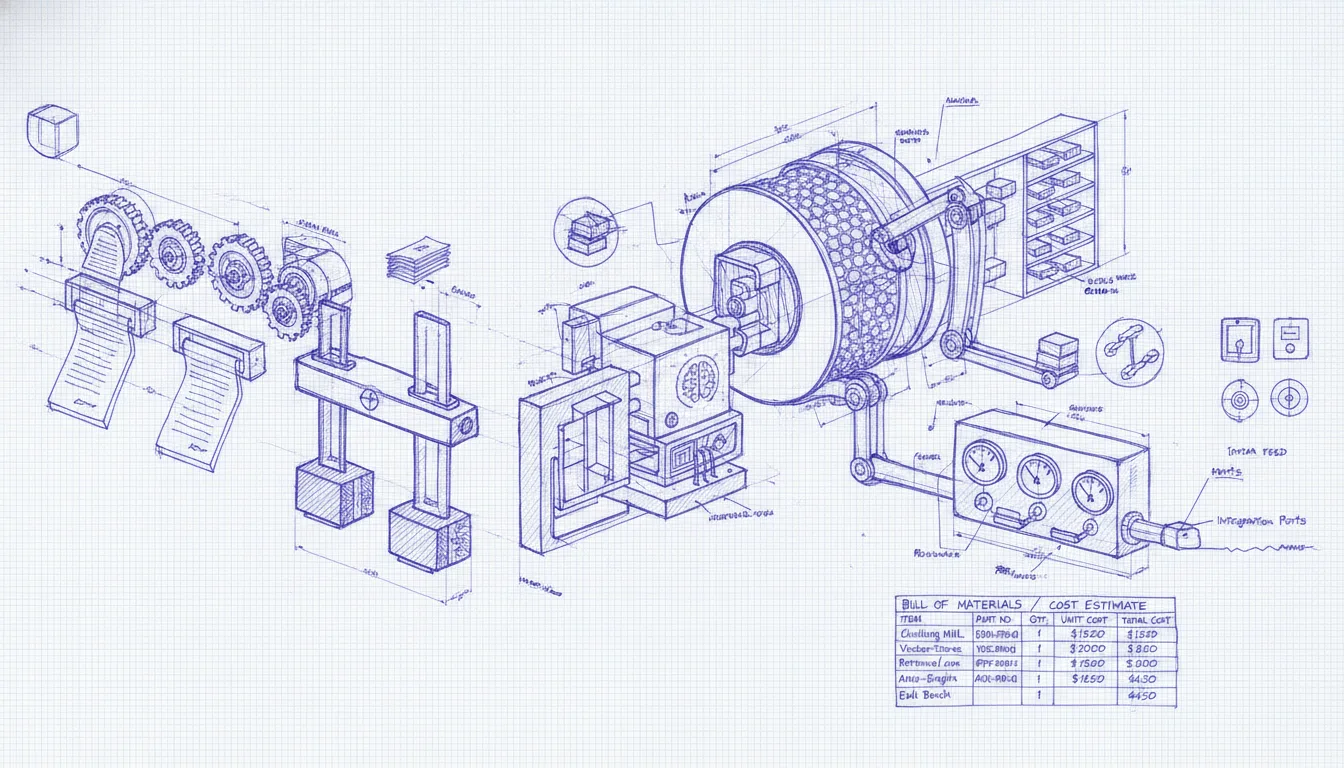 bicaralabs · GUIDE
Custom RAG pricing is often discussed as if it comes down to model tokens. In practice, that is rarely the main cost driver.
Most of the budget in a production RAG build goes into making retrieval reliable, connecting the system to real workflows, and proving that outputs are good enough to trust. If you want to scope a project honestly in 2026, focus less on demos and more on the engineering work required to ship.
What are you actually paying for in a custom RAG build?
You are paying for much more than prompt wiring. A real build usually includes document ingestion, chunking strategy, metadata design, retrieval logic, evaluation, application integration, security controls, deployment, and ongoing tuning.
Why is data quality usually the first big cost driver?
RAG performance depends heavily on the quality and structure of the source material. If documents are outdated, inconsistent, duplicated, or missing metadata, the team will spend time cleaning and organizing data before retrieval quality improves.
How does retrieval design affect the budget?
Retrieval is where many projects either become useful or quietly fail. Choices around chunk size, indexing, filtering, hybrid search, reranking, citations, and access controls all shape both implementation effort and the amount of testing required.
Why do integrations cost more than most teams expect?
A standalone chatbot demo is cheap compared with a system that works inside real operations. Connecting RAG to internal tools, permissions, approval flows, ticketing systems, CRMs, or knowledge bases usually takes more effort than the generation layer itself.
What makes enterprise requirements push costs up?
Once the system touches sensitive information, the scope changes. Authentication, role-based access, audit logs, redaction, human review paths, deployment constraints, and governance requirements add engineering work, but they are often necessary for production use.
Where do RAG budgets usually get wasted?
Budgets get wasted when teams index everything before defining one useful workflow, or when they optimize the interface before validating retrieval quality. Another common waste is skipping evaluation early, which leads to long cycles of subjective feedback instead of clear pass-fail criteria.
Why is evaluation work worth budgeting from the start?
Without a test set, teams cannot tell whether changes improved the system or just changed its behavior. A practical evaluation setup helps measure groundedness, retrieval accuracy, citation quality, and task completion before the system reaches users.
How can you right-size scope before building?
Start with one workflow, one user group, and one source set that matters. Define what a good answer looks like, what should never be answered, what systems must be connected, and what level of human review is required before expanding scope.
When does a lightweight RAG build make more sense than a full platform?
If the use case is narrow, the documents are stable, and the user group is small, a focused implementation is often enough. You do not need a complex agent layer, custom orchestration, or broad ingestion pipeline on day one if the first job is simply to retrieve the right information reliably.
When should you invest in a more custom architecture?
A deeper build makes sense when retrieval must work across multiple repositories, permission layers, languages, or downstream actions. If the system needs to support strict security controls, measurable evaluation, and integration into production workflows, custom engineering becomes the safer path.
What should you ask a vendor before approving budget?
Ask what part of the scope is data work, what part is retrieval and evaluation, and what part is integration and deployment. You should also ask how success will be measured, what is included in iteration cycles, and what assumptions could change the cost after discovery.
Want a realistic scope before you commit budget?
If you are planning a custom RAG build, start with a technical discovery that narrows the workflow, data sources, risks, and deployment path before engineering begins. Book a discovery call with Bicara Labs at https://bicaralabs.com/contact to scope the build around the work that actually matters.